

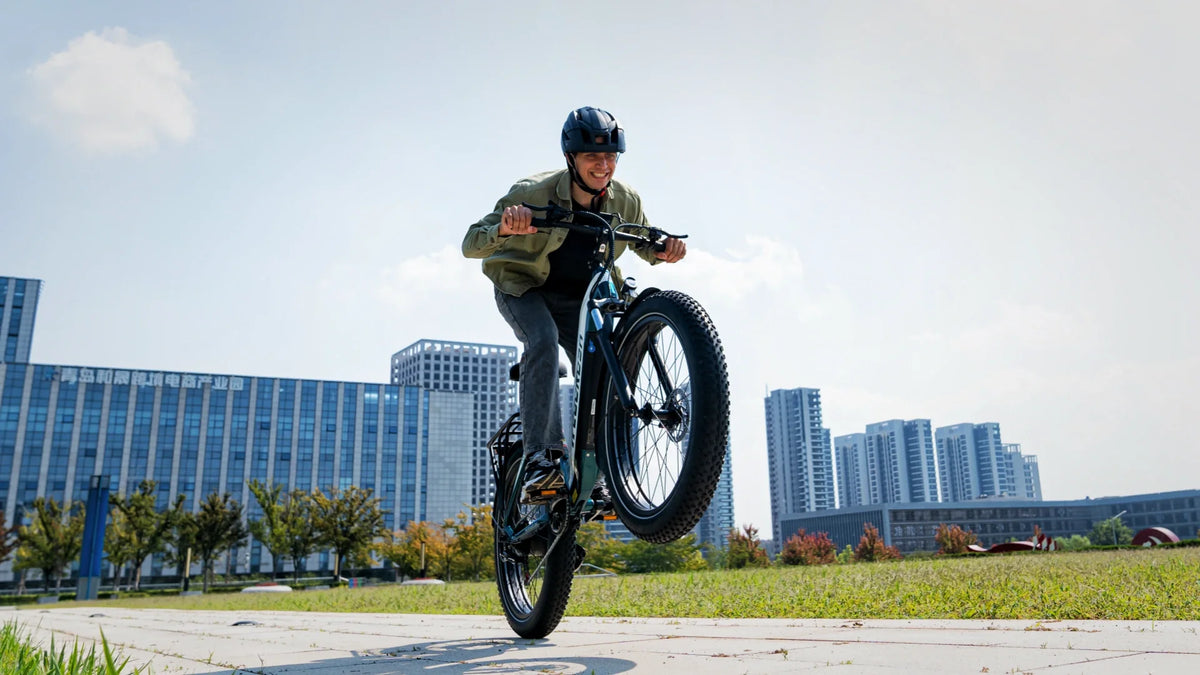
Choosing an e-bike can get confusing pretty quickly. You see the same 250W motor, similar fat tyres and familiar-looking frames, but then the real questions start: Which ECORUSH e-bike is better for commuting? Is the R1 or R3 more suitable for easier access? Is the R2 worth choosing if you need a folding e-bike? And what makes the R6 different from the others?
The good news is that the ECORUSH range is actually quite easy to understand once you look at how each bike is designed to be used.
The ECORUSH e-bike range currently includes the ECO R1, R2, R3 and R6 as the main models in this comparison. They all use a 250W motor and 25 km/h assistance limit, but their frame designs, wheel sizes, battery capacities and intended riding styles are different.
So instead of simply comparing numbers, let's look at what each bike is like to live with.
ECORUSH E-Bike Comparison at a Glance
| Model | Best suited to | Battery | Tyres | Claimed range |
|---|---|---|---|---|
| ECO R1 | All-terrain riding & riders who prefer a high-step frame | 48V 13Ah | 26×4.0" | 50–100 km |
| ECO R2 | Commuting, storage & transport | 48V 10.4Ah | 20×4.0" | 60–100 km |
| ECO R3 | All-terrain riding with easier access | 48V 13Ah | 26×4.0" | 50–100 km |
| ECO R6 | Longer commutes & everyday riding | 48V 15.6Ah | 20×4.0" | 70–120 km |
All four models use a 250W motor, with a stated top assisted speed of 25 km/h. Their quoted range is affected by factors such as rider weight, temperature, road conditions and riding style, so it should be treated as a guide rather than a guaranteed distance.
ECO R1: A Traditional All-Terrain ECORUSH E-Bike
The ECO R1 is the straightforward choice if you want a larger-wheel fat tyre e-bike with a traditional high-step frame.
It uses 26×4.0-inch puncture-resistant tyres, a 48V 13Ah battery and a 250W brushless motor. ECORUSH lists a range of 50–100 km and a maximum load of 120 kg.
The 26-inch fat tyres give the R1 a substantial feel on the road, while the front suspension and Shimano 7-speed drivetrain make it suitable for a mix of everyday riding and less predictable surfaces.
Who is the ECO R1 for?
The R1 makes sense if you:
-
Prefer a traditional high-step bike frame
-
Want 26-inch fat tyres
-
Ride on a mixture of paved and uneven surfaces
-
Want a rear rack for carrying everyday items
-
Prefer a more conventional full-size e-bike feel
The R1 is not trying to be the smallest or easiest bike to store. Its appeal is its familiar bike layout and all-terrain setup.
ECO R2: The Folding ECORUSH E-Bike for Everyday Flexibility
The ECO R2 takes a different approach.
Instead of using 26-inch wheels, it has compact 20×4.0-inch puncture-resistant fat tyres and a foldable aluminium frame. The 48V 10.4Ah battery provides a stated range of 60–100 km, while the maximum load is 120 kg.
This makes the R2 particularly interesting for people who do not want their e-bike to take up the entire garage, hallway or car boot.
The folding frame measures 168 × 60 × 120 cm when folded, according to the product page. It also has front suspension, a Shimano 7-speed drivetrain, a rear rack and a shock-absorbing saddle and seat post.
Why choose the ECO R2?
Think about your routine.
If you commute during the week but also want to take your e-bike away for weekend trips, being able to fold the bike can make a real difference. The 20-inch fat tyres also keep the bike compact without giving up the wider tyre setup.
The R2 is therefore less about being an “entry-level” version of the range and more about flexibility.
ECO R3: Similar Performance to the R1, Easier Access
Here is where the ECORUSH e-bike comparison gets interesting.
At first glance, the R1 and R3 look like two separate bikes. But their core specifications are extremely similar.
Both use a 48V 13Ah battery, 250W motor, 26×4.0-inch tyres, 120 kg maximum load and a stated 50–100 km range. Both also use a Shimano 7-speed drivetrain and front suspension.
The big difference is the frame.
The R1 uses a high-step frame, while the R3 uses a step-through frame. ECORUSH itself describes the R3 as providing easier access while retaining the performance characteristics of the R1.
R1 vs R3: Which frame makes more sense?
If you prefer the traditional feel of a high-step bicycle, the R1 is the natural fit.
If getting on and off the bike easily matters more to you, the R3's step-through design may be more convenient.
This is one of those decisions where there is no need to obsess over the motor or battery figures. They are essentially the same. The better question is simply:
Which frame would you feel more comfortable using every day?
ECO R6: Built Around Longer Everyday Rides
The ECO R6 is the model to look at if range and everyday comfort are high on your list.
Like the R2, it uses 20×4.0-inch puncture-resistant fat tyres. But the R6 comes with a larger 48V 15.6Ah battery, giving it a stated range of 70–120 km.
The R6 also uses a step-through aluminium frame and is designed around everyday commuting. ECORUSH lists a recommended rider height range of 165–190 cm.
There is also a front suspension fork, shock-absorbing seat post, Shimano 7-speed gearing and rear rack. The full-colour multifunction display shows information such as speed, battery level, pedal assist and mileage.
R2 vs R6: What is the real difference?
Both have 20×4.0-inch tyres and folding/compact-bike appeal is strongest with the R2, while the R6 focuses more heavily on longer-distance everyday riding.
The biggest specification difference is the battery:
-
R2: 48V 10.4Ah / 499.2Wh
-
R6: 48V 15.6Ah / 748.8Wh
The R6 therefore has a larger battery and a higher stated range of 70–120 km compared with the R2's 60–100 km.
If you regularly cover longer distances and do not need the R2's folding design, the R6 is the model worth looking at more closely.
ECORUSH R1 vs R2 vs R3 vs R6: Which One Fits Your Ride?
Instead of asking which ECORUSH e-bike is “best”, start with how you actually plan to ride.
Choose the R1 if you want...
A 26-inch fat tyre e-bike with a traditional high-step frame. It is a good fit for riders who want a sturdy, conventional riding position and a bike suited to mixed surfaces.
Choose the R2 if you want...
A folding e-bike that is easier to store and transport. Its 20×4.0-inch tyres, folding frame and rear rack make it a practical choice for city use and weekend trips.
Choose the R3 if you want...
The same basic performance package as the R1 but prefer a step-through frame. If getting on and off the bike easily is important, the R3 is the more natural option.
Choose the R6 if you want...
A compact 20-inch fat tyre e-bike with a larger battery and longer stated range. It is particularly suited to riders who expect to spend more time commuting or covering longer everyday distances.
What Do All Four ECORUSH E-Bikes Have in Common?
Despite their differences, the R1, R2, R3 and R6 share quite a few fundamentals.
All four use a 250W motor, have a stated assisted top speed of 25 km/h, use wide 4.0-inch fat tyres and have Shimano 7-speed gearing. They also feature front suspension and mechanical disc brakes.
That means the decision is less about choosing between completely different levels of e-bike and more about choosing the right shape, wheel size, battery and riding setup for your routine.
ECORUSH currently lists a 2-year e-bike warranty across the range.
Final Thoughts: Finding the Right ECORUSH E-Bike
There is no single ECORUSH e-bike that makes sense for everyone.
The R1 and R3 are the closest pair. Their core performance is very similar, so the frame design becomes the deciding factor: high-step for the R1 or step-through for the R3.
The R2 is the more flexible choice if folding and storage matter. Its 20-inch wheels and foldable frame make it easier to work into a city lifestyle.
The R6 takes the compact 20-inch fat tyre format and pairs it with ECORUSH's largest battery in this comparison, with a stated range of up to 120 km.
So before choosing, think less about the model number and more about your actual week: Where will you ride? How far? How often will you need to store or transport the bike? And which frame feels easiest for you to use?
Once you answer those questions, the ECORUSH e-bike comparison becomes much simpler.
Shop the ECORUSH E-Bike Range
ECO R1 – All-Terrain Electric Bike
https://ecorush.eu/products/eco-r1
ECO R2 – 20×4.0 Folding Electric Bike
https://ecorush.eu/products/eco-r2
ECO R3 – All-Terrain Step-Through Electric Bike
https://ecorush.eu/products/eco-r3
ECO R6 – 20×4.0 Fat Tyre Electric Bike
https://ecorush.eu/products/eco-r6
Frequently Asked Questions
1. What is the difference between the ECORUSH R1 and R3?
The R1 and R3 have very similar core specifications, including a 48V 13Ah battery, 250W motor, 26×4.0-inch tyres and a stated 50–100 km range. The main difference is the frame: the R1 has a high-step frame, while the R3 has a step-through design.
2. Is the ECORUSH R2 a good choice for commuting?
The R2 is designed with everyday flexibility in mind. It has a foldable aluminium frame, 20×4.0-inch tyres, front suspension, a rear rack and a Shimano 7-speed drivetrain. Its stated range is 60–100 km.
3. Which ECORUSH e-bike has the longest stated range?
Among the four models in this comparison, the ECO R6 has the longest stated range at 70–120 km. It uses a 48V 15.6Ah (748.8Wh) battery. Actual range depends on factors including rider weight, temperature, road conditions and riding style.
4. Are ECORUSH e-bikes limited to 25 km/h?
The product pages for the R1, R2, R3 and R6 state a 25 km/h assisted top speed. The motor stops providing assistance at the stated top speed, while the rider can continue beyond it using their own pedalling power.
5. Which ECORUSH e-bike should I choose?
It depends on your priorities. The R1 suits riders who prefer a high-step 26-inch fat tyre bike; the R2 focuses on folding convenience; the R3 offers a step-through 26-inch format with similar core performance to the R1; and the R6 combines 20-inch fat tyres with the largest battery and longest stated range in this comparison. The best match depends on your riding style, storage needs and typical distance.
Share:
Best E-Bike for Autumn: Worauf es beim E-Bike-Fahren im Herbst wirklich ankommt