

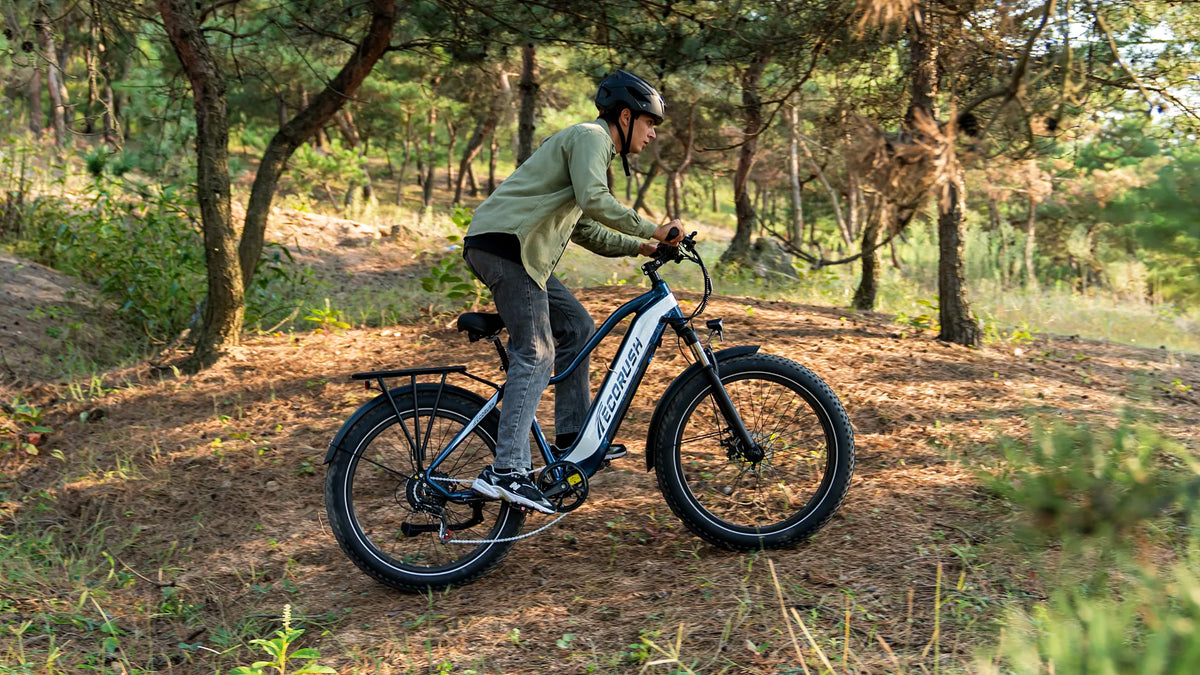
When you start shopping for a fat tire e-bike, you quickly realize how much choices matter. The sheer grip, the cool rugged look, and the ability to roll over potholes, sand, or snow make fat tires incredibly popular. But once you commit to a fat tire build, a major fork in the road appears: 20x4 e-bike or 26x4 e-bike?
Choosing between these two wheel sizes isn't just about numbers on a spec sheet. It changes how the bike handles, how easy it is to store, how stable it feels at high speeds, and who it fits best.
In the ECORUSH lineup, this choice usually comes down to comparing compact versatility like the ECO R2 against full-sized powerhouse options like the ECO R1 and ECO R3. Let's break down how they compare so you can figure out which setup fits your everyday riding style.
The Case for 20×4.0 Fat Tire E-Bikes (Compact & Agile)
Wheels with a 20x4 e-bike setup, like the ECO R2, strike a brilliant balance between traditional bike styling and compact agility. They feature smaller 20-inch rims wrapped in thick, 4-inch wide fat tires.
Why Riders Love 20×4.0 Fat Tires
-
Agile Handling: Smaller wheels mean quicker steering response. Weaving through tight city streets, crowded bike lanes, or sharp turns feels effortless.
-
Easier Step-Over and Lower Standover: Because the overall frame geometry is more compact, mounting and dismounting is noticeably easier for a wider range of rider heights.
-
Space-Saving Storage: Many 20-inch fat tire bikes—including folding designs—take up significantly less space in a hallway, apartment, or car boot.
Who is it for?
The 20×4.0 size is ideal for urban commuters, apartment dwellers with limited storage, riders of average height who want an easy-to-handle machine, and anyone looking for a playful, responsive ride for daily errands.
The Case for 26×4.0 Fat Tire E-Bikes (Full-Sized & Momentum)
Stepping up to a 26x4 e-bike, such as the ECO R1 or ECO R3, shifts the experience entirely. You get full-sized adult bicycle dimensions combined with massive, wide-profile rubber.
Why Riders Love 26×4.0 Fat Tires
-
Superior Momentum and Rollover: Larger 26-inch wheels naturally roll over large obstacles, fallen branches, deep ruts, and rough terrain with far less feedback hitting the handlebars.
-
True All-Terrain Dominance: If your weekend plans involve loose gravel, thick mud, sand, or snowy tracks, the larger contact patch and tall stance keep you cruising smoothly.
-
Natural Fit for Taller Riders: Taller adults often feel cramped on smaller frames. A 26-inch frame provides a more natural, stretched-out leg extension and a commanding view of the road.
Who is it for?
The 26×4.0 size suits taller riders, cross-country adventure seekers, heavy-duty commuters facing rough backroads, and anyone who prioritizes high-speed stability over compact storage.
Head-to-Head Comparison: ECO R2 vs. ECO R1 / ECO R3
To put things into perspective, let's look at how ECORUSH’s core fat tire models match up in everyday scenarios:
| Feature | ECO R2 (20×4.0) | ECO R1 & ECO R3 (26×4.0) |
| Wheel & Tire Size | 20 × 4.0 inches (Compact fat tire) | 26 × 4.0 inches (Full-sized fat tire) |
| Best Suited For | City commuting, easy storage, agile handling | Long-distance trekking, tall riders, rugged off-road paths |
| Maneuverability | Highly responsive, snappy, quick turns | Steady tracking, excellent momentum on straightaways |
| Storage & Transport | Easier to load into car boots or tight spaces | Bulkier footprint, requires a hitch rack or garage space |
Finding Your Fit in the ECORUSH Lineup
If your priority is convenience, easy handling, and a nimble ride that handles city obstacles without taking over your garage, the ECO R2 is a fantastic daily companion.
On the other hand, if you want a commanding, full-sized trekking and mountain machine built for extended range, heavy-duty utility, and maximum stability over rough ground, exploring full-framed options like the ECO R1 and ECO R3 will give you the heavy-duty performance you are looking for.
Frequently Asked Questions (FAQ)
1. Is a 20x4 e-bike too small for tall adults?
Not necessarily, but it depends on the frame design. While 20×4.0 bikes like the ECO R2 have a lower standover height and compact wheelbase, they usually feature adjustable seatposts and handlebars to accommodate various heights. However, riders over 185 cm (approx. 6 feet) often feel more comfortable on a 26×4.0 frame.
2. Do 26x4 e-bikes have a longer battery range than 20x4 models?
Wheel size itself doesn't dictate battery range—battery capacity (measured in Watt-hours) and motor efficiency do. However, full-sized 26-inch models often feature larger frame triangles that can house higher-capacity battery packs designed for long-distance touring.
3. Which tire size is better for winter riding or snow?
Both handle snow well because 4-inch wide fat tires float over soft surfaces rather than sinking. However, the larger rollover capability of a 26×4.0 tire gives it an edge when pushing through deeper unplowed snow or thick mud.
4. Are fat tire e-bikes hard to ride on normal paved roads?
They feel slightly different at first due to the wider contact patch and slight road hum from the tread, but you adjust quickly. They actually offer unmatched comfort on poorly paved city streets by soaking up vibrations from cracks and potholes.
5. How do I maintain fat tires on an e-bike?
Keep an eye on your tire pressure. Riding on paved roads usually requires higher pressure to reduce rolling resistance, while lowering the pressure slightly off-road increases your traction. Regularly check for embedded sharp objects to prevent punctures.
Conclusion
Choosing between a 20×4.0 and a 26×4.0 fat tire e-bike comes down to balancing where you ride and how you store your bike. If you need agile steering, easy transport, and a compact footprint, the ECO R2 is an exceptional choice. If you want maximum rollover capability, stability on rugged trails, and a full-sized frame, the ECO R1 and ECO R3 deliver peak all-terrain performance.
Share:
Make the Most of Summer with ECORUSH Electric Bikes